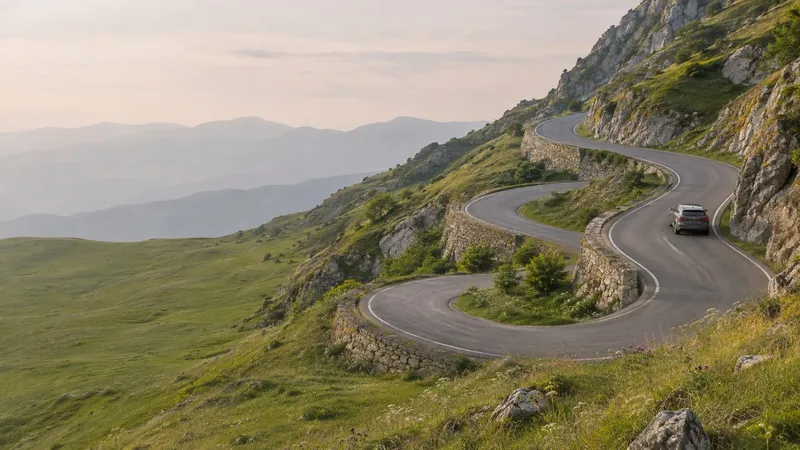
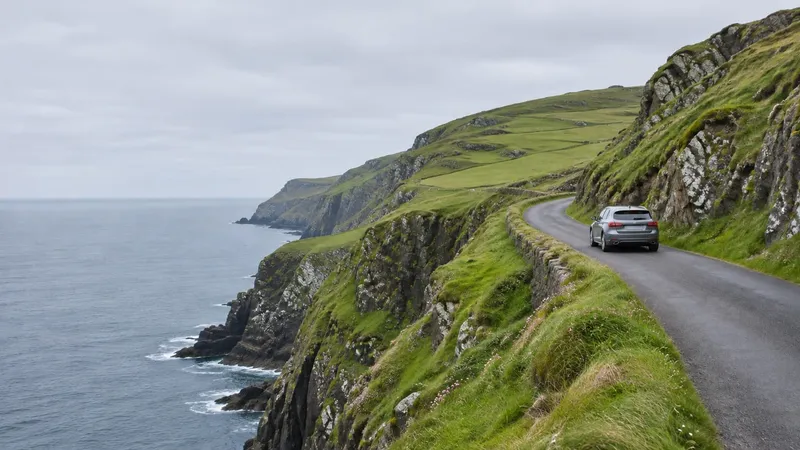
The Ring Road in Iceland, also called Route 1, is the most traveled road around the country, and Visit Iceland says all 1,322 kilometers of it are paved and open throughout the year.[1] Bad weather in winter can still cause temporary and local closures. This guide covers what a rental car driver needs to plan the loop: its length, how to divide it into days, where to pick up the car, the speed limits, gravel, F-roads, winter and how to check road conditions.
How long is the Ring Road in Iceland?
Route 1 is 1,322 kilometers long, which is about 821 miles. The sources used for this guide give no drive time and no recommended number of days, which makes the number of days your own choice. The next section shows how the length divides.
Iceland Ring Road itinerary: how many days to plan
The table divides the 1,322 kilometers evenly by the number of days. It is arithmetic on the length, not a stage plan: the sources for this guide do not list stages, and real days change with weather, stops and where you sleep.
| Days | Kilometers a day, on average | Miles a day, on average |
|---|---|---|
| 5 | about 264 | about 164 |
| 7 | about 189 | about 117 |
| 10 | about 132 | about 82 |
Safetravel says the speed limit applies to the best conditions and that in winter the conditions are seldom good enough to drive according to it.[2] A day’s distance can therefore take longer than the average suggests, so plan more time than the table shows. If you want the loop in 5 days, plan the long days first and keep the shorter ones for the parts of the road you want to see.
Compare car rental in Iceland
500+ rental companies. Free cancellation on most bookings.
Where should you pick up a rental car for the Ring Road?
Visit Iceland says most car rental services offer pick-up from the airport in Keflavík. This site has a page for Keflavík Airport, the Reykjavík city page and a page for Akureyri Airport in the north, with the Akureyri city page next to it.
Visit Iceland’s page does not suggest a direction for the loop, so the direction is your choice. If you start in one place and finish in another, ask the rental company at booking whether it allows that, because the sources here do not cover the terms. For rules that apply to any rental in the country, see the Iceland country page.
What are the speed limits on the Ring Road?
The Icelandic police page on Ísland.is lists the common speed limits: 30 to 50 kilometers per hour in urban areas, 80 on gravel roads and 90 on paved roads outside urban areas. Road signs indicate the maximum speed in each area, so the posted sign is the limit that applies.[3]
The same page says speed cameras across the country photograph vehicles over the limit and send a ticket to the registered owner of the vehicle. The consequences it lists include fines that get higher the faster you go, penalty points and losing your driver’s license. Ask the rental company how it handles a ticket that arrives after you return the car.
What are the rules for gravel, bridges and photo stops?
Visit Iceland says gravel roads can be driven with a normal car and do not require four-wheel drive. It adds that many accidents occur where pavement changes into gravel, and that you need to reduce speed before the surface changes. Safetravel gives the reason: the tires lose grip when crossing from paved road to gravel.
Safetravel’s twelve tips for drivers include three that matter on a loop like this one:
- Do not stop in the middle of the road or on its side for photos. Find a safe spot, because many accidents have happened when tourists stop at an unsafe place to take pictures.
- Stop for oncoming traffic at single-lane bridges. Safetravel gives the speed limit there as 50 km/h and says the car that arrives first has the right of way.
- Keep the car’s lights on at all times. Safetravel says the “Auto” setting is not enough.
Visit Iceland adds that sheep roam freely from late spring through summer and can be unpredictable near the road, so slow down when you see them. It also says automated gas stations operate in all towns and along major highways, that distances between them vary and that most pay only by debit or credit card with a PIN, so plan the fuel before the next stretch.
Can you drive F-roads or off-road in a rental car?
The Icelandic Road and Coastal Administration, the IRCA, says a mountain road, or F-road, is usually classified as such when it is exceptionally uneven, rough and steep, or has one or more unbridged river crossings that drivers must ford. These roads are only open a couple of months a year; the IRCA gives Sprengisandsleið as an example that does not fully open until early July, sometimes later, and is then passable only with large four-wheel-drive vehicles and superjeeps.[4]
Visit Iceland says that if you plan to drive into the highlands you need a four-wheel-drive jeep with good ground clearance, and that you should ask the car rental agency about the best choice. Whether a rental contract allows F-roads is a matter for the rental company, and this guide does not cover it.
All off-road driving is prohibited in Iceland. Stay on marked roads and designated parking areas.
Ísland.is says all off-road driving is prohibited according to the Nature Conservation Act.[5] The IRCA adds that unauthorized off-road driving in the highlands carries serious consequences under the Nature Conservation Act No. 60/2013, including prosecution, substantial fines or even imprisonment.
Driving the Ring Road in winter
Visit Iceland says the Ring Road is open all year, and that winter driving can be more challenging because of snowfall and storm alerts. It recommends a four-wheel-drive vehicle for winter. Safetravel says a 4x4 can help in some winter conditions but does not remove the risk of skidding on ice, and it adds that you should make sure your rental car has appropriate winter equipment such as winter tires.[6]
Safetravel also advises allowing extra time, because daylight is limited, keeping your plans flexible and waiting in a safe place if the weather gets worse. It says strong winds, snow, rain and drifting snow can make roads difficult and sometimes dangerous even when they seem clear. It also says that in Iceland it is mandatory to have the front and rear lights on 24 hours a day, and that the “Auto” setting often does not switch on the rear lights.
For the class code of a four-wheel-drive offer, read rental car classes explained.
How do you check road conditions in Iceland?
Visit Iceland recommends a daily forecast check on vedur.is or wet.is, and it names Safetravel as the page that keeps you up to date on road closures, wind speed, traffic and webcams. Safetravel points to umferdin.is for road conditions and to its own website and app for alerts.
The IRCA runs the 1777 traffic service, which provides the latest information on road conditions and the weather for travelers and guidance by phone and e-mail. The service is available from 06:30 to 22:00 every day, year round.[7] Safetravel’s tips say to check the weather and road conditions in the morning and a few times during the day, because the weather changes quickly.
If a road is marked closed, the Safetravel guidance applies: Lokað means closed, and respecting it is for your own safety.
Planning the rest of the trip
Drivers coming from outside Iceland may need to read what an international driving permit is before they book. The Ring Road is one of several routes in this section; the Scottish loop is covered in the NC500 guide and the Irish coast in the Wild Atlantic Way guide.
To compare this route with the other three, see best road trip routes in Europe by rental car.