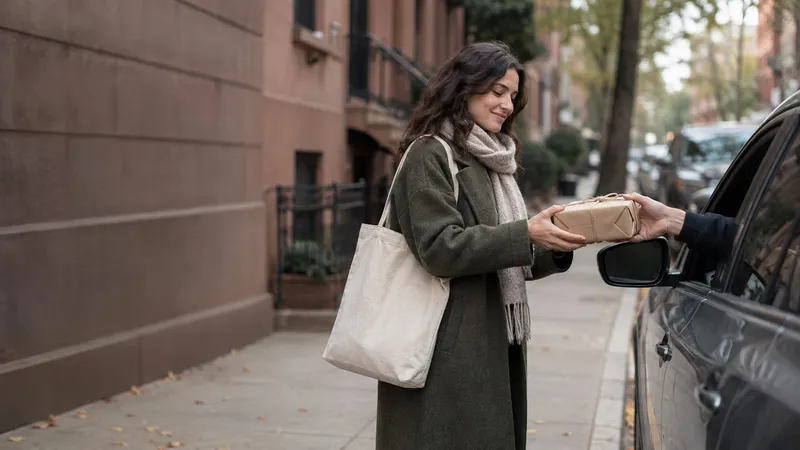
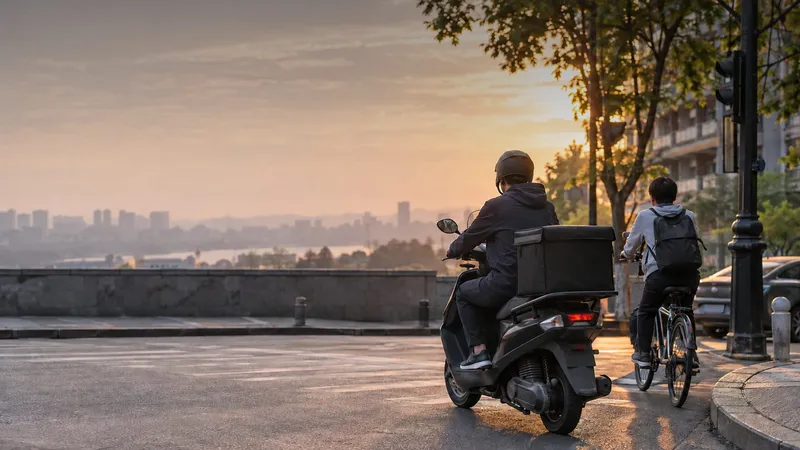
How does Grubhub work as a driver? You apply in the Grubhub for Drivers app, pass an identity check and a background check, then accept delivery offers from restaurants and stores, either on blocks of time you reserve or on the fly where the market allows.[1] Grubhub pays you per delivery, adds 100% of the tips from completed orders and does not pay for your gas or insurance.
Grubhub is an online food ordering and delivery service. A customer picks a restaurant, places an order, and Grubhub’s app offers the delivery to a nearby delivery partner, who collects the food and takes it to the customer. This guide covers the driver side only: sign-up, how offers and scheduling work, and how pay and cash-outs work. It makes no claim about what you will earn.
What do you need to become a Grubhub driver?
Grubhub’s driver pages give a short list. All delivery partners must be at least 18 years old, or 21 in Las Vegas, and need a vehicle (a car or a bike; the home page also mentions motorcycles and scooters depending on the market), a smartphone with a data plan on a current operating system, and a checking account for direct deposit.[2] Drivers need a valid driver’s license and auto insurance, while bikers need a valid license or a state ID.
There is no resume, interview or delivery experience to produce. You download the app, create a profile, and Grubhub completes a mandatory identity verification and background check. Grubhub says most partners are on the road within days, depending on the market, and in as little as a day once approved.
How do you get on the road when a market is full?
Grubhub says it sometimes stops accepting new drivers in a market so that existing partners keep enough orders. That is the waitlist. Applicants are taken first come, first served within each market, and Grubhub checks in with long-waiting applicants and removes those who opt out or do not reply. You can also pick a nearby open market during the application and start sooner.
How do offers, blocks and scheduling work?
After a customer places an order, partners accept offers in the app to pick up and deliver it. Grubhub’s recommended route is block scheduling: you reserve blocks of time in the Scheduling menu, with lengths that start at 30 minutes and can reach two hours or more, depending on the market.[3] Grubhub says drivers on a scheduled block are considered for nearby offers ahead of unscheduled drivers.
Access to blocks depends on your driver level, which Grubhub updates every Monday from your last 14 days of delivery stats. Higher levels get earlier access. Grubhub warns that regularly dropping blocks within 72 hours of the start may restrict your scheduling access, so reserve only what you can work.
Blocks are not the only way. Where the market allows, you toggle on Taking offers and receive offers in real time. Your delivery boundary, set per market, matters here: you need to be inside it when you toggle on.
| Way of working | How it works | Grubhub’s stated advantage |
|---|---|---|
| Scheduled block | Reserve time in advance in the app | Considered for nearby offers first |
| On the fly | Toggle on Taking offers | No advance commitment, market dependent |
Compare car rental
500+ rental companies. Free cancellation on most bookings.
How does Grubhub pay delivery partners?
Grubhub’s pay model has four parts: delivery pay, a Grubhub contribution, tips and Missions or special offers.[4] Delivery pay is a base amount that accounts for mileage, delivery type, time spent and your local market, plus any bonuses. The Grubhub contribution tops pay up to a minimum rate for your market on slow days when you work a scheduled block and meet its offer-commitment criteria. You keep 100% of tips from completed deliveries, and Missions are goals with extra cash for reaching them in a set time. Special offers and contributions apply only to certain markets and periods.
Some places have their own rules: Grubhub’s pay page points to separate pages for guaranteed pay in New York City, guaranteed minimum pay in Seattle and the effect of Proposition 22 in California.
Two details affect what you actually take home. First, Grubhub says delivery partners are responsible for all driving costs, including gas, maintenance and insurance. Second, if an order is canceled before pickup you may still receive part of the original offer, and if it is canceled after pickup you receive the full offer amount. A reassigned order, however, is not paid. For a wider view of pay, see where the money goes at Uber Eats and Grubhub.
When do Grubhub drivers get paid?
Direct deposit goes to your bank every Thursday. For faster access, Instant Cash Out lets you move available earnings to a bank account or debit card whenever you want, up to $500 a day. Grubhub’s pay page says it is free for Chase Bank customers and $0.50 per transfer for other banks. Funds usually arrive right away if your bank supports Real Time Payments, and may take a few days if it does not.
Tip: Cash-outs started on a weekend may not appear until the following Monday, because some banks process transfers only during business hours. Check with your bank before relying on same-day money.
What else should you know before you start?
Grubhub says some orders, such as its Shop + Pay convenience and pharmacy deliveries, require you to pay at the store with a Driver Card, and that the card has no PIN. Drivers 21 and older in select markets may receive alcohol orders. Grubhub also publishes an account violation system: three violations block an account, and each expires after 90 days.
Because couriers are independent partners, set aside money for taxes and track your driving costs; a tax professional can say what applies to you.
Grubhub’s pages do not publish an average hourly figure, so the earnings summary in the app after your first few weeks is the only number worth planning around. For a side-by-side look, see Grubhub vs DoorDash for drivers.