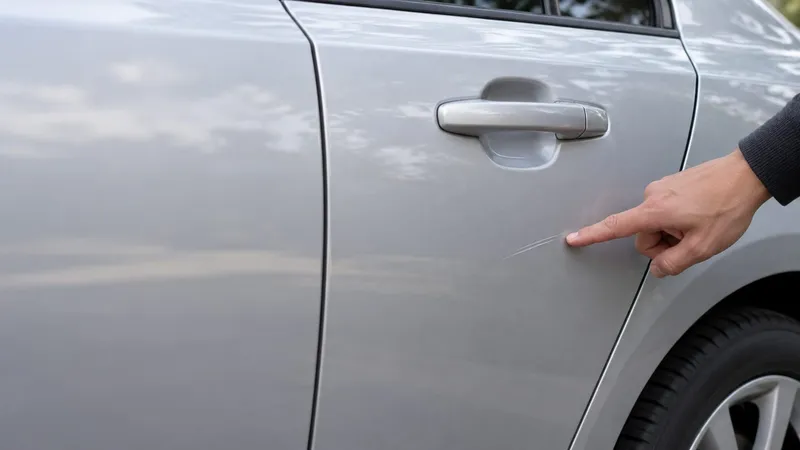
Rental car insurance always starts with third-party liability, the cover for harm you cause to other people, and in the EU the law requires it for every vehicle. Directive 2009/103/EC obliges each member state to make sure civil liability for the use of vehicles is covered by insurance.[1] Everything else, from a waiver for damage to the car to cover for your own injuries, is a separate layer with its own price, limits and exclusions.
What insurance comes with a rental car?
A rental car comes with the legal minimum, which is liability cover for people and property you harm. In the EU the directive sets the floor for that cover at 1 million euros per victim or 5 million euros per claim for personal injury, and 1 million euros per claim for property damage, though member states may require more. The European Consumer Centre France describes this third-party liability as compulsory and says that in principle it is included automatically in the rental price.[2]
Included does not mean complete. Liability insurance pays for what happens to others. It does not repair the car you drive. Cover for damage to the vehicle may be in the price or sold as an option, with or without an excess, depending on the offer. The rental terms of your offer show which cover is in the price and what the excess is.
This is the layer you never choose. You can read the wording, and in the EU you cannot opt out of it.
What is not covered by default?
Damage to the rental car and theft of it are not covered by third-party liability. The European Consumer Centre France states that the compulsory liability cover does not extend to theft or to damage to the rented vehicle caused by the driver. Those risks are handled through a collision or theft waiver, which the centre describes as optional insurance, sold with or without an excess (CDW or TP).
The excess is the figure that matters most. If the car is stolen, your liability is limited to the excess, but only where you have the cover for damage or theft in your contract. Supplementary cover can lower that figure, and the centre puts the resulting excess at between 600 and 1,500 euros.
Even paid cover has exclusions. The centre lists damage to tires, glass, underbody and roof, lost keys, damaged locks and fueling the car with the wrong fuel as items that are commonly not covered. For a closer look at how waivers and the excess are structured, see our guide to the collision damage waiver.
Do you need to buy extra insurance at the desk?
Whether you need desk products depends on what the booking already includes and on what else covers you. No source can give one answer for every renter, because the layers overlap and the terms vary by country and company. The questions to settle are practical ones: how large is the excess, which exclusions apply, and would your own policy or card pay if the car were damaged.
The National Association of Insurance Commissioners, which speaks for US state insurance regulators, lists the common desk products. These are the collision damage waiver, also called a loss damage waiver, supplemental liability insurance and personal accident insurance.[3] It describes each one and gives daily price ranges, and it advises renters to look at their own coverage first and to call the card company to ask what it provides.
Personal accident cover deserves a note. The European Consumer Centre France says the company may offer individual protection as an additional, chargeable option, usually called PAI. The centre also advises checking that the second driver is insured.
Make these decisions at home. At the counter there is a queue behind you and a contract in front of you.
What your own policy or card may already cover
Your personal car insurance policy or your payment card can already cover part of the same risk, and that overlap is the reason to read both before the trip. The NAIC says many credit cards include some level of collision and theft protection, and that those benefits are usually secondary. A secondary benefit pays only after other coverage has been used. The European Consumer Centre France adds that some top-of-the-range cards cover the excess if there is an accident.
What a policy or a card pays differs by issuer, by country and by the type of rental, so the safe step is to ask for the written terms. We cover that in a separate guide on whether your own car insurance covers a rental car, at home and abroad.
Desk cover, excess insurance or your own cover: how they compare
The three routes answer the same question in different ways. The table sets out what each one does, who pays first and which document shows the details.
| Route | What it addresses | Where to read the terms |
|---|---|---|
| Desk waiver | Damage or theft of the rental car | Rental terms |
| Separate excess policy | The excess you owe the rental company | Policy wording |
| Your own policy or card | Depends on the issuer and country | Policy or card benefit guide |
The order in which the covers pay is not the same everywhere, and the NAIC points out that card benefits are usually secondary. A written answer from the issuer settles the question faster than any general rule.
Compare car rental
500+ rental companies. Free cancellation on most bookings.
How does rental car insurance work abroad?
Inside the EU, a car insured in one member state is covered for injuries it causes in the others. Your Europe, the European Commission portal, says your car insurance policy issued in your home country covers you throughout the EU if you injure someone.[4] It also says the number plate is proof of liability insurance, which is why the police do not normally stop you to check.
That page describes a car you own and insure. A rental car is insured by the rental company, so the contract and its terms decide the rest. The rules differ by place, and the pages on renting a car in Spain, renting a car in Italy, renting a car in Portugal and renting a car in Ireland show how the same booking steps look in each country.
Outside the EU, the framework changes. GOV.UK tells drivers heading abroad with their own vehicle to check whether they need a green card or additional insurance for the destination, and to make sure they have the right insurance for each country on the route.[5] For a hire car it says to check what you are covered for with the hire company.
How to decide before you book
Decide before you book by working through the layers in order, using documents rather than assumptions.
Ask the rental company for the written terms of the offer before you pay, and read the excess and the exclusions first. Then ask your insurer and your card issuer for their written terms on rental cars in the country you are visiting.
- Find the liability cover in the rental terms. In the EU it is compulsory, so look for the limits rather than whether it exists.
- Find the excess for damage and theft, and the list of exclusions.
- Ask your own insurer and card issuer in writing what they pay for a rental car in that country, and whether they pay first or second.
- Compare the price of any desk product with the excess it removes.
- Keep the written answers with your booking and carry them on the trip.
Overlapping cover can mean paying twice for the same risk. Card benefits come with conditions, so read them before you accept or refuse anything at the counter.
The choice is yours, and it is a better one when it is made with the documents in hand. For a step-by-step walk through the rest of the rental, from licence to return, see how to rent a car.